Rembrandt van Rijn
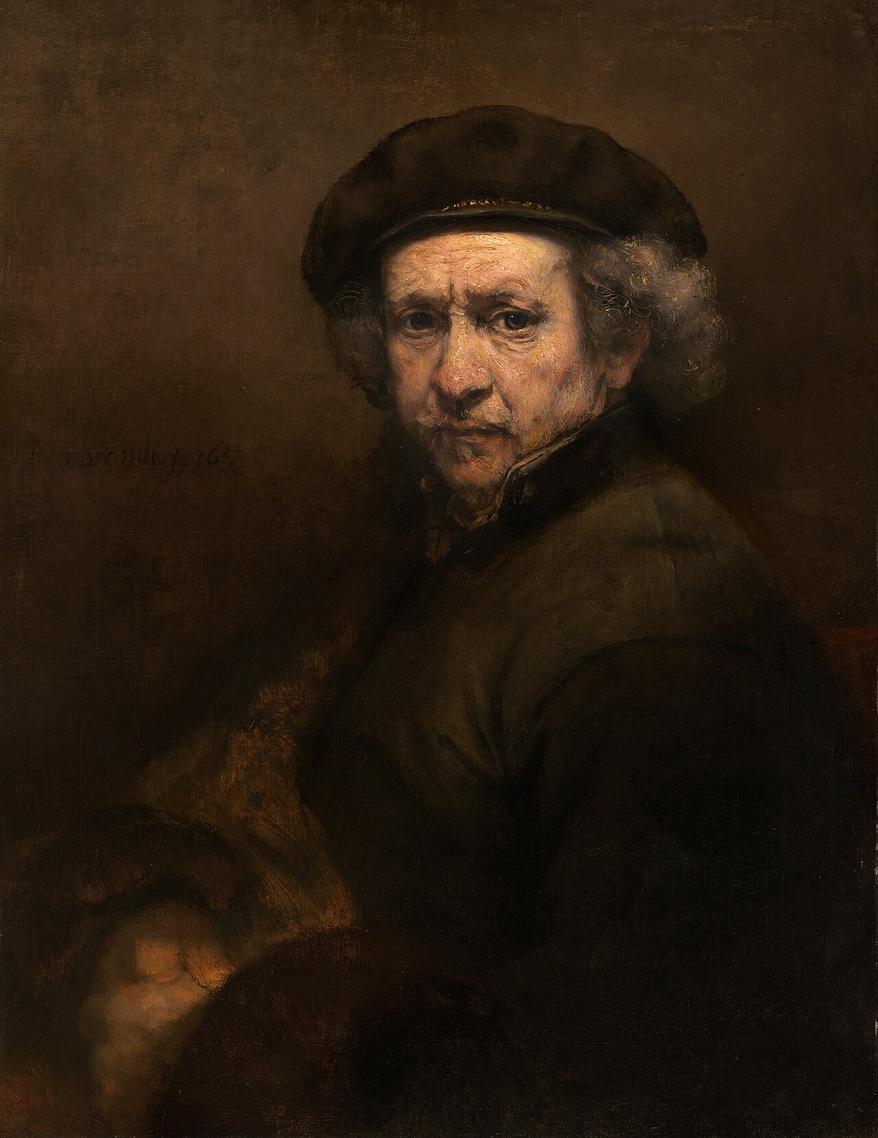
1659, Oil on canvas, National Gallery of Art, Washington, D.C. Public Domain · SourceA face that refuses to behave
Look at Rembrandt’s face before you look at the beret. The light catches his forehead, nose, and cheek, but it does not polish them into a smooth, ideal image. You can make out uneven color, creases, and the small marks of an actual face. The high collar hides part of his jaw; the expression does not hide much at all.
Painted in 1659, this is one of Rembrandt’s many self-portraits. He sits with his hands clasped in his lap, wrapped in a dark cloak. Brown and gray set the quiet mood, while patches of red behind him may show the back of a chair and a tablecloth. The composition is restrained. The paint is not.
The brushwork is the point
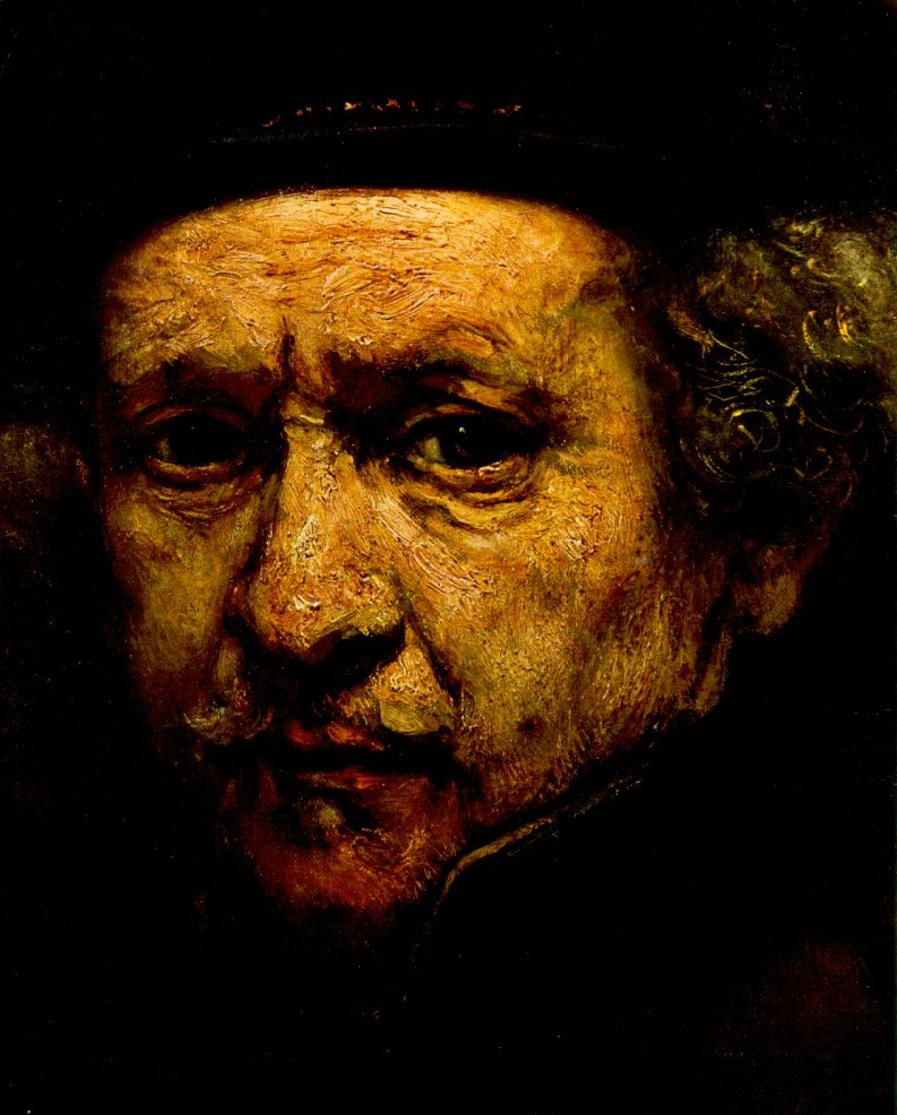
Rembrandt lets the paint do more than describe skin. Thick strokes catch the light on the forehead, nose, and cheek; nearby, softer and less defined marks fall back into shadow. The result feels physical: you can almost sense the paint sitting on the canvas. The face seems solid not because every edge is carefully blended, but because the surface changes from one passage to another.
That difference is striking beside the quieter cloak and background. The portrait is less finished than many of Rembrandt’s self-portraits, but its roughness is not simply a failure to finish. Technical study has found that Rembrandt sometimes left thick passages in place and worked other areas more finely. Here, the face carries the energy of that process in plain sight.
There is another small decision hidden in the headwear. Rembrandt first painted himself in a light-colored cap, then changed it to the black beret. The earlier cap was the kind he used in self-portraits showing himself at work, so he may initially have meant to point more directly to his trade as a painter. The change leaves us with a quieter image: an artist looking out, not demonstrating his tools.
Not a tidy “genius” story
By 1659, Rembrandt had been declared insolvent and had lost his house through a sale in 1658. That context matters, but it does not turn the painting into a diary with a single, obvious message. The picture gives us a face shaped by time and a painter making precise choices about what to show—and how the paint itself should work.
So try this when you see it: let your eyes move from the sharply lit face to the rougher, darker clothing. Rembrandt does not make every part equally legible. He directs your attention with light, texture, and omission. The beret is memorable; the face is the argument.
Works by Rembrandt van Rijn on the wall