
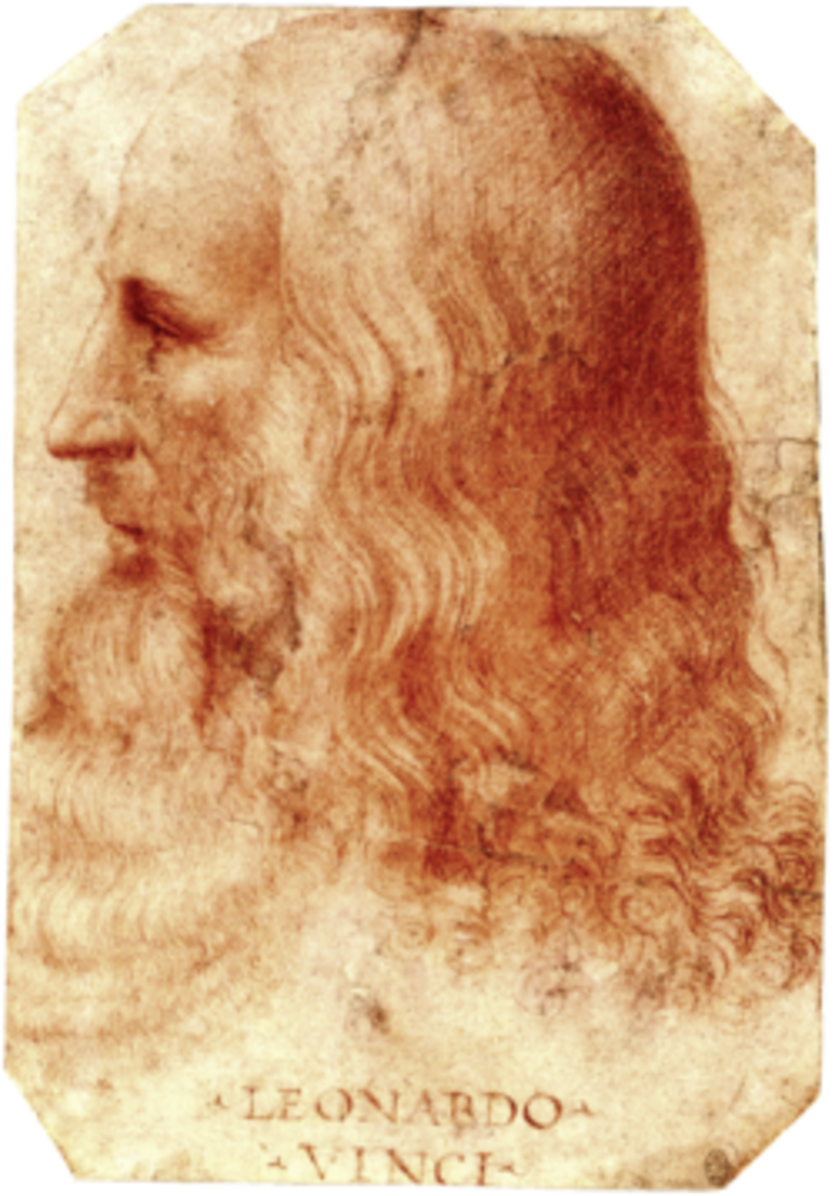
Leonardo da Vinci
circa 1515 to 1517, Red chalk on paper, Royal Collection, United Kingdom Public Domain · SourceLeonardo, Seen by the Student Who Stayed
Leonardo da Vinci is usually presented as a one-man universe: painter, inventor, thinker, legend. This portrait makes the story more human. It is attributed to Francesco Melzi, the pupil who remained with Leonardo until his death in 1519.
Look at the long hair, the heavy beard, and that firm profile. Melzi gives us no dramatic scene and no clever props. The face does the work. Its age and seriousness push against the familiar image of Leonardo as a name floating above history. Someone had to sit, look closely, and make the marks. Here, that someone was a younger artist trained in Leonardo’s orbit.
The attribution deserves a little care. The work is attributed to Melzi, rather than securely documented as his. Wikipedia describes a red-chalk profile portrait of Leonardo by Melzi, dated to about 1515; Wikimedia Commons dates this image to circa 1515–1517. So treat the name and date as informed attributions, not a signed receipt from the studio.
Melzi’s importance did not end with making pictures. After Leonardo died, he inherited and organized his papers, assembling material that became known as the Codex Urbinas, a major compilation of Leonardo’s notes on painting. That makes this portrait an unusually personal meeting point: the student who helped preserve the master’s ideas also left us an image of the man.
Next time you see Leonardo’s name treated like a force of nature, pause at the beard. This portrait asks you to remember the human chain behind the legend: one artist looking at another, and a pupil doing the patient work of keeping his teacher’s work alive.
Image note: Attributed to Francesco Melzi, Portrait of Leonardo da Vinci, circa 1515–1517. Public domain, via Wikimedia Commons.