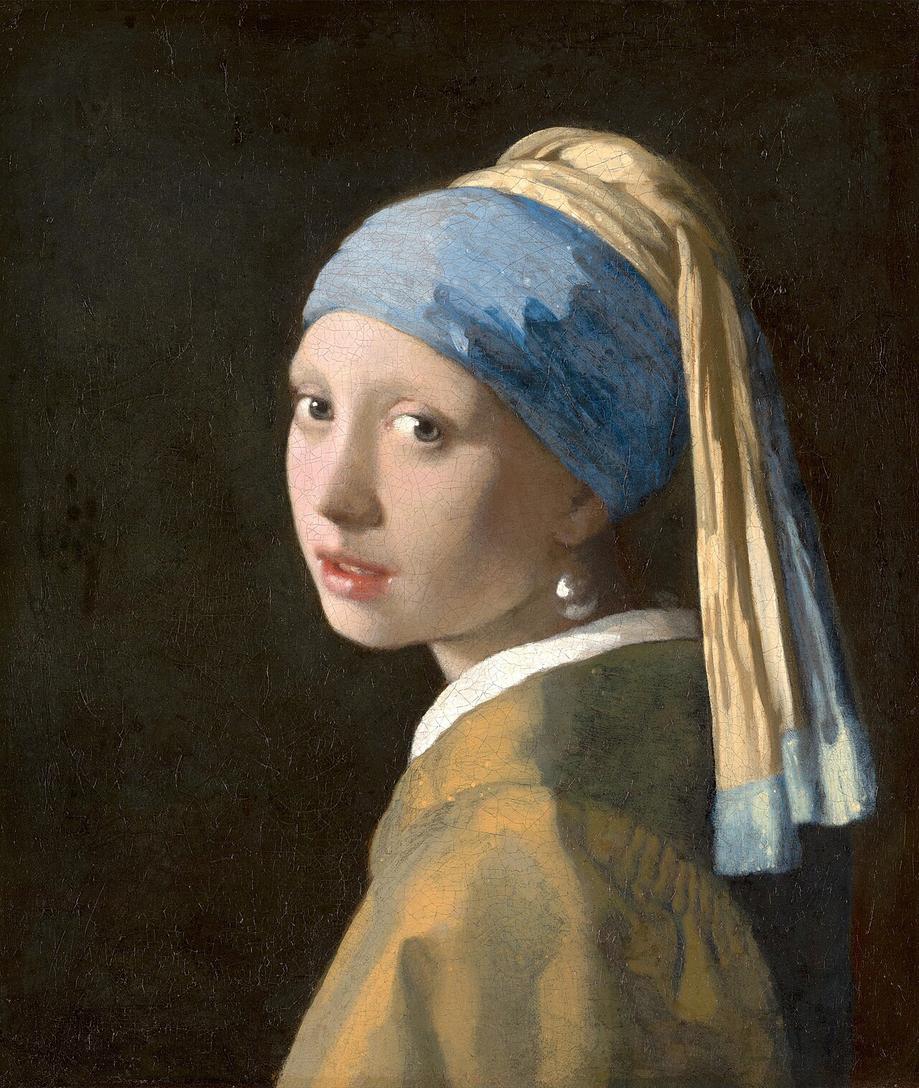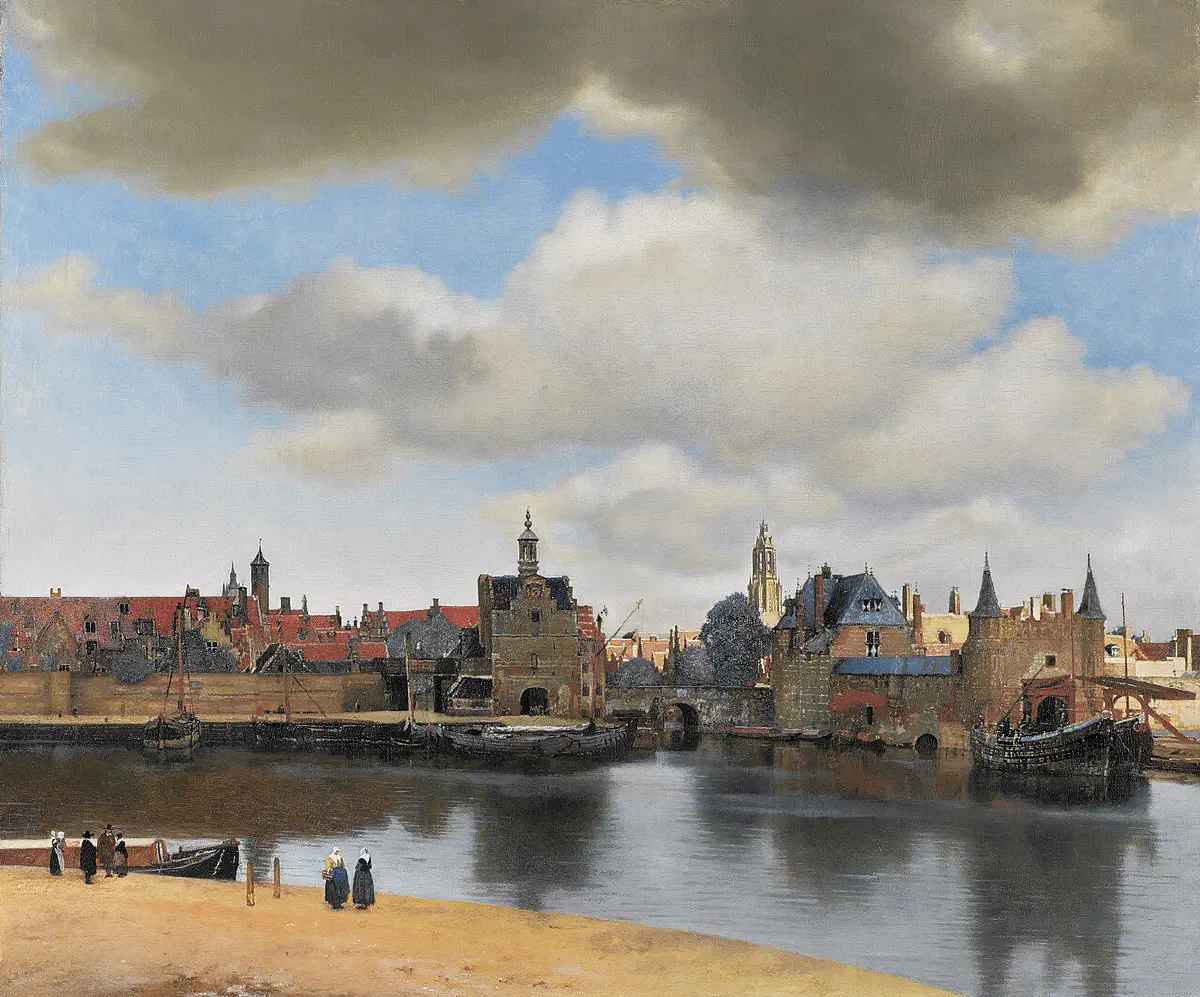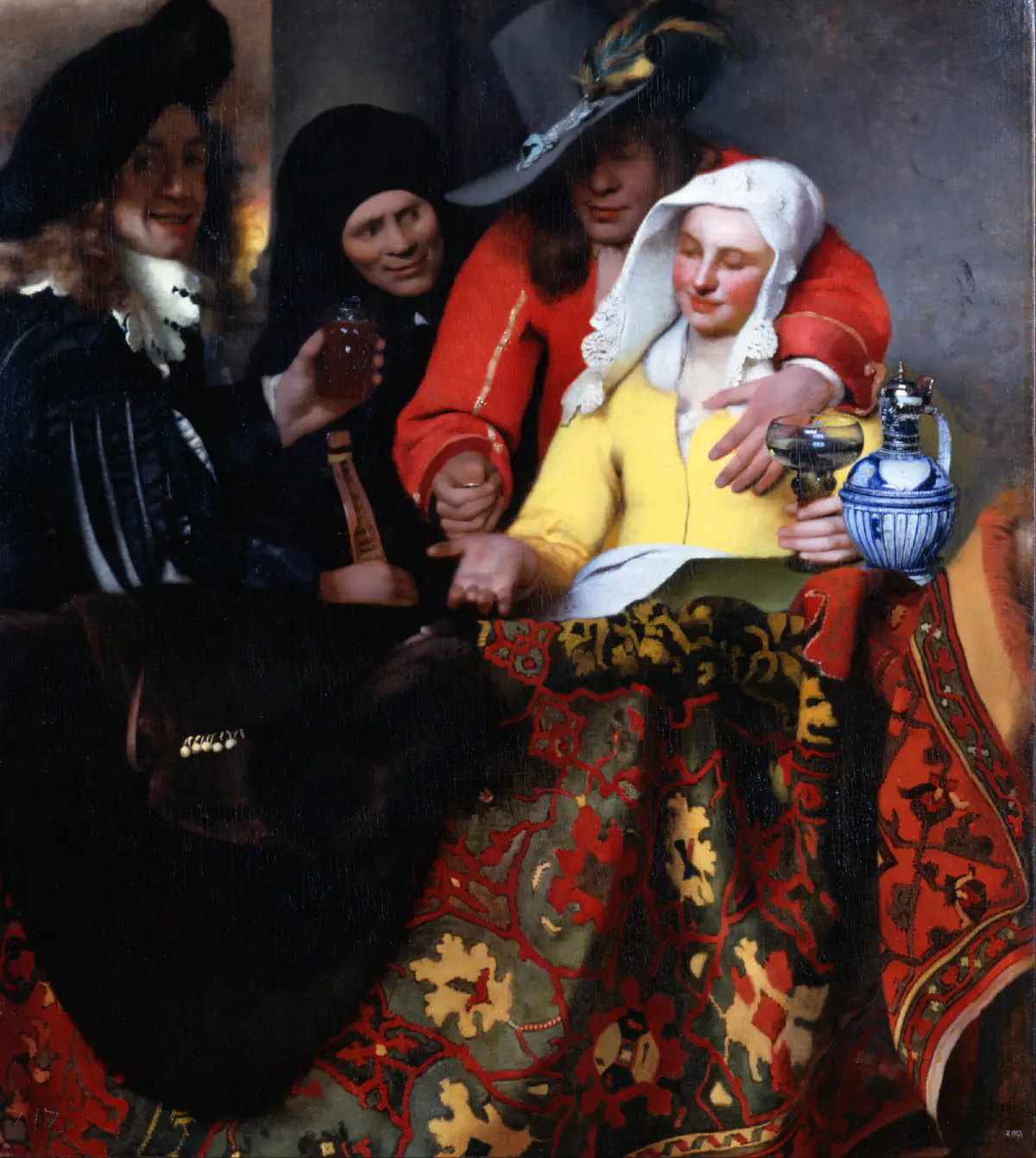
Johannes Vermeer
1656, Oil on canvas, Gemäldegalerie Alte Meister, Dresden Public Domain · SourceA house full of noise, a room full of silence
If you look at a Vermeer painting, you might picture the man living in absolute tranquility, working in a silent white room while the rest of the world goes by.
The reality was almost the exact opposite. Johannes Vermeer (1632–1675) lived in a bustling household in the Dutch city of Delft, surrounded by his mother-in-law, his wife Catharina, and eleven surviving children. He ran an inn inherited from his father, traded in paintings by other artists, and spent years serving as the head of the local painters’ guild.
Finding the time and silence to paint was not a luxury handed to him. It was a daily battle. Perhaps that is why his rooms feel so extraordinarily still: the quiet on his canvases was something he had to invent.
Two paintings a year and pigments worth more than gold
Unlike his contemporaries in the Dutch Golden Age who ran bustling studios and turned out dozens of canvases a year for eager merchants, Vermeer was agonizingly slow. In his entire working life of about twenty years, he likely completed no more than forty-five paintings. Only thirty-four or thirty-five survive today.
He didn’t work like an assembly line because he obsessed over every millimeter of surface. He waited for glazes to dry, shifted chair legs by half an inch, and insisted on using natural ultramarine—made from ground lapis lazuli—not just for blue skies, but for table linens, the shadow on a whitewashed wall, and the corner of an apron. It was a pigment more expensive than gold, bought on credit while the household bills piled up.
When French armies invaded the Netherlands in the disastrous year of 1672, the Dutch art market collapsed overnight. Vermeer could no longer sell his paintings or his inventory. Within three years, crushed by financial anxiety and mounting debt, he fell ill and died suddenly at the age of forty-three, leaving Catharina with eleven children and an overwhelming stack of unpaid baker’s tabs.
What happens inside a Vermeer room
Almost all of Vermeer’s famous paintings take place in the exact same corner: next to a window on the left, in a room flooded with cool morning light.
He didn’t paint heroes, battles, or dramatic miracles. He painted the ordinary moments that slip through our fingers:
- A maid carefully pouring milk into an earthenware pot.
- A young woman reading a letter by an open window.
- A geographer looking up from a map, lost in thought.
- Two people pausing over a glass of wine.
There is no big drama or punchline. What Vermeer understood better than anyone before him is that light is not just a tool to reveal objects; light is the subject. Look at the tiny dots of paint on a loaf of bread or the brass studs of a leather chair. He makes daylight feel like a physical presence entering the room.
The ghost who came back
When Vermeer died, he practically vanished from history. He was known in Delft, but without students or an international following, his name was forgotten for nearly two centuries. Some of his finest canvases were even sold under the names of other Dutch painters just so dealers could fetch a higher price.
It wasn’t until the nineteenth century, when a French critic named Théophile Thoré-Bürger tracked down his surviving works and dubbed him the “Sphinx of Delft,” that the world rediscovered what it had lost.
Today, people travel across continents just to stand in front of his small canvases. You don’t need to know the history of the Dutch Republic or seventeenth-century optics to understand why. You only have to stand still for a minute, watch the morning light strike a whitewashed wall, and let the noise of the outside world fall away.
Works by Johannes Vermeer on the wall