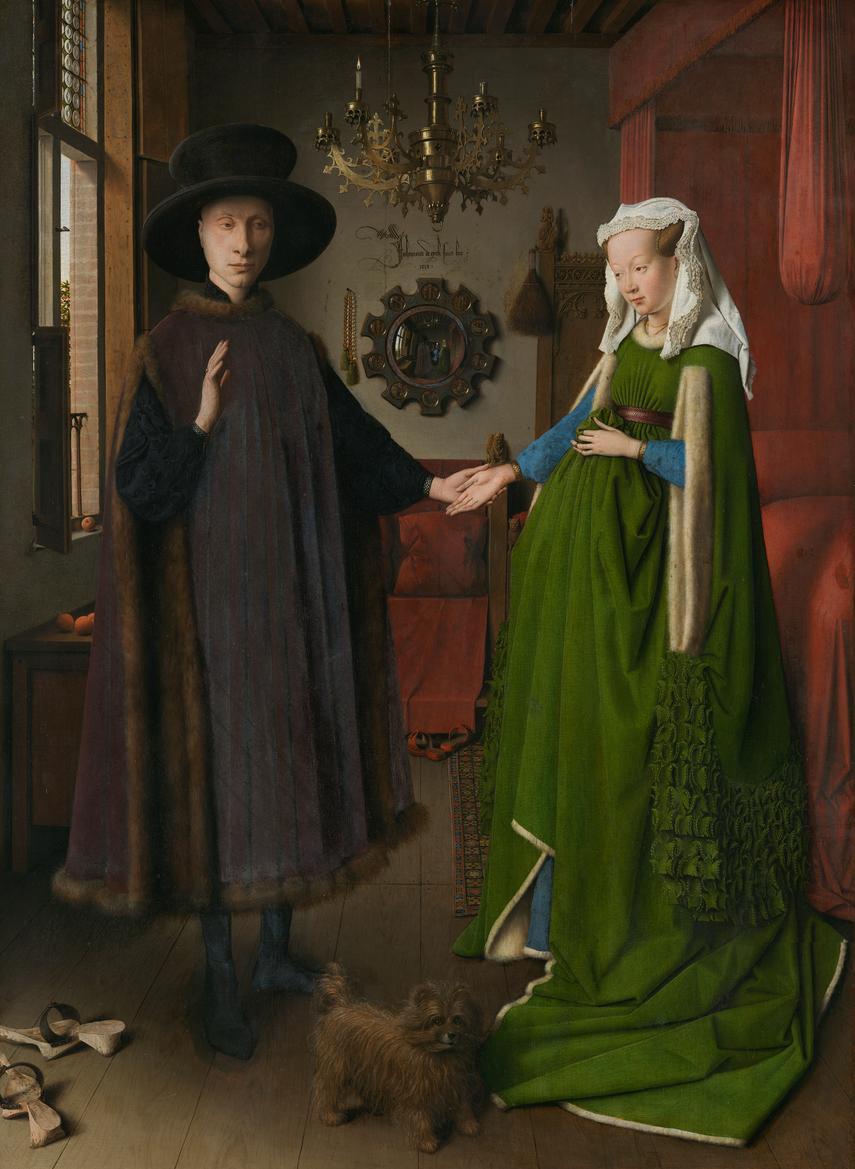
Jan van Eyck
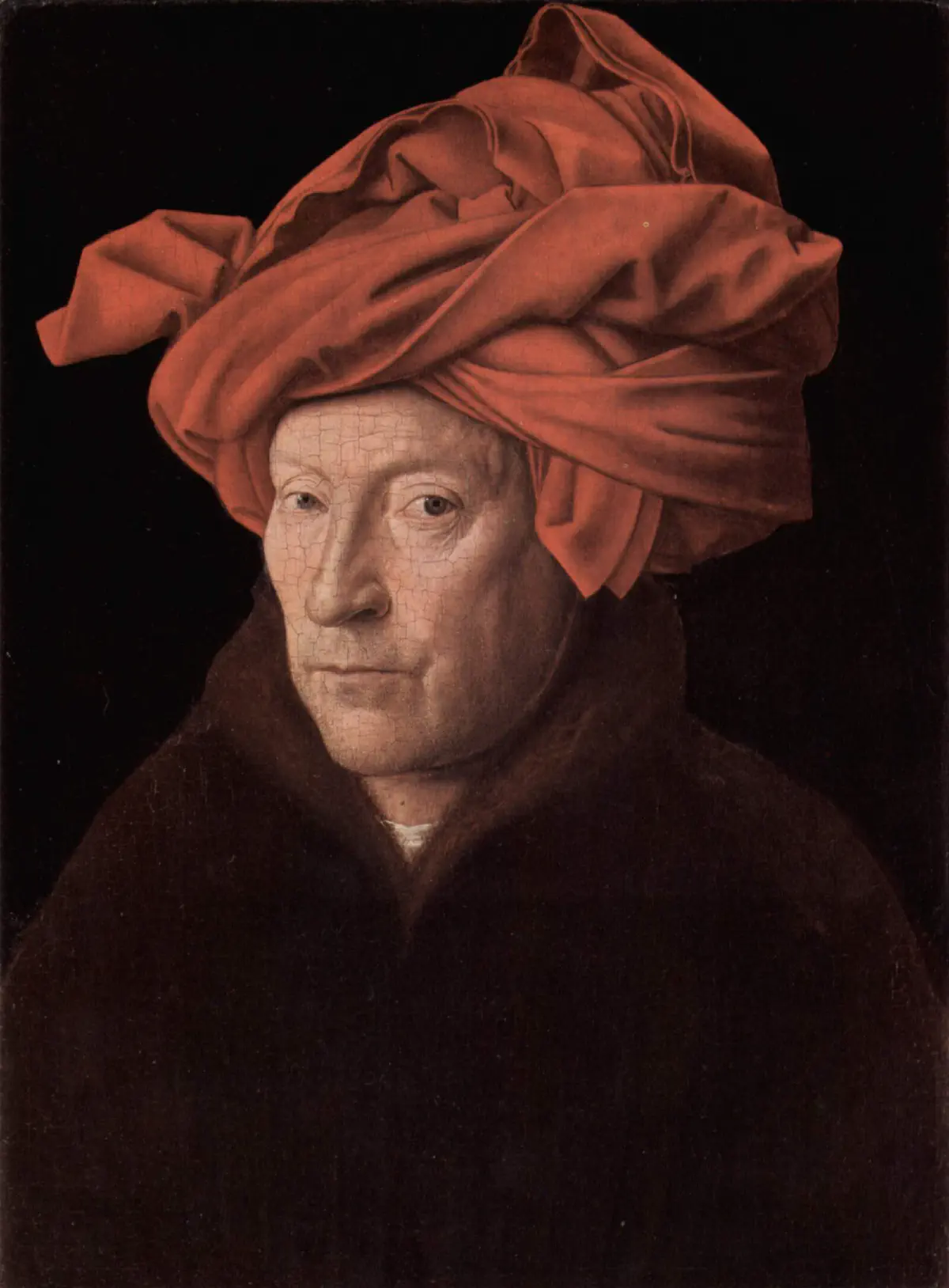
1433, Oil on panel, National Gallery, London Public Domain · SourceThe painter who looked back
A man in a red turban meets your eyes. He is close enough to feel present, but the question hanging over him is much bigger than his small painted panel: is this Jan van Eyck himself?
The answer is not settled. The work is usually called Portrait of a Man or Portrait of a Man in a Turban, and the self-portrait identification remains a possibility, not a fact. That uncertainty is a good place to meet van Eyck: not as a distant genius with all the answers, but as a working painter whose surviving pictures still make us ask better questions.
A court painter with a second job
Van Eyck was active in Bruges and worked for Philip the Good, Duke of Burgundy, as court painter. His job could take him beyond the studio: the duke sent him on diplomatic journeys, including a documented trip to Lisbon in 1428 connected with plans for a marriage. He died in Bruges on 9 July 1441.
The familiar story says van Eyck invented oil painting. He did not. That claim is an oversimplification. What he did do was push the medium’s possibilities with striking skill, using thin, translucent layers to build rich colour and convincing shifts of light and tone. Oil paint was not a magic trick. It was a material he learned to control.
A world where the visible could mean more
Van Eyck worked in a world where religious images and ordinary things could occupy the same space. His paintings bring close observation to sacred subjects, while everyday objects and settings can carry spiritual meaning. The result is not a choice between realism and symbolism. In his work, the two sit side by side.
He also treated the act of painting as something worth signing. On the 1433 portrait, the frame bears his motto, ALS ICH KAN—“As I can”—a pun on his name. It is modest on the surface and confident underneath. Van Eyck was among the few Netherlandish painters of his time to sign his panels. He made sure the painter’s name stayed in the picture.
Stand close: the face, the frame, the claim
Look at the sitter’s gaze first. It does not drift into a private daydream; it meets yours. Then look at the red headwear: the folds are arranged with care, but the face is the real test of van Eyck’s attention. The slight unevenness of a human face is not polished away into a generic ideal.
Now move your attention to the frame. Its inscription turns the object into more than a border: it records a date and a maker’s claim. The painting seems to say, “I was here.” Whether the sitter is van Eyck is still debated, but the artist’s presence is unmistakable.
Imagine standing beside him while he works. We cannot know what he said, or what he thought of this particular likeness. We can say that he was a court employee, a painter with workshop assistants, and a trusted envoy—not a lonely wizard sealed away from ordinary life. He worked with materials, deadlines, patrons, and other people. The astonishing surface came from attention and practice.
“As I can” is enough
Van Eyck’s legacy is not that he made painting effortless. It is that he made looking feel consequential. A red fold, a glint of light, a line cut into a frame: each can help a painted person feel stubbornly present.
Next time you see this portrait, ask two questions. Who is the man? And what changes when the painter signs his own name beside him? The first may remain open. The second is already written on the frame: Jan van Eyck was here, as best he could.
Works by Jan van Eyck on the wall