Georges Seurat
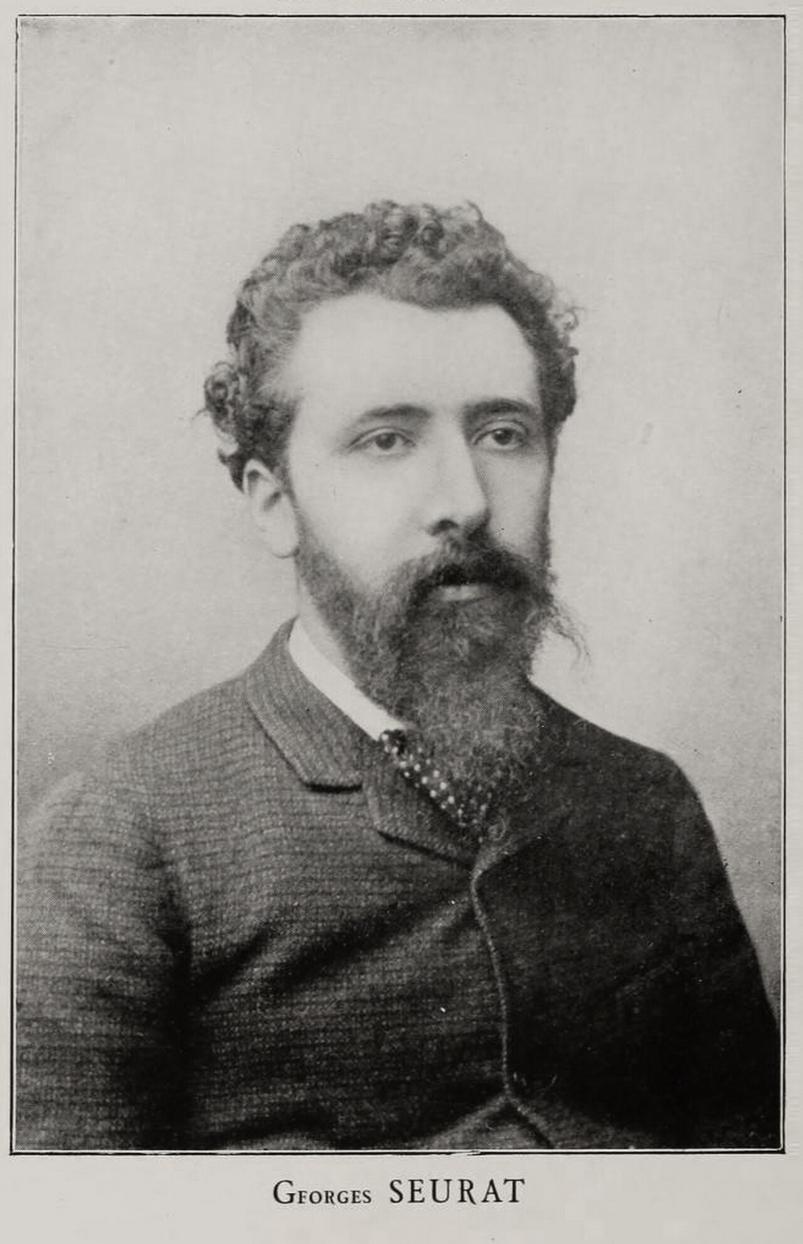
1888, Photograph, Unknown; source cited on Wikimedia Commons is Lucie Cousturier’s book Seurat Public Domain · SourceThe Human Hook: A Painter Who Refused to Leave Color to Chance
Georges Seurat wanted painting to feel spontaneous, but he approached it with the patience of someone testing a theory. In his best-known method, he set small touches of different colors beside one another and let the viewer’s eye do the mixing. The result can look calm and sunny from across the room. Come closer and the surface breaks into marks, one deliberate decision at a time. Seurat made a picture feel less like a passing impression and more like a planned event.
Quick Facts & Context: From Paris to the Park
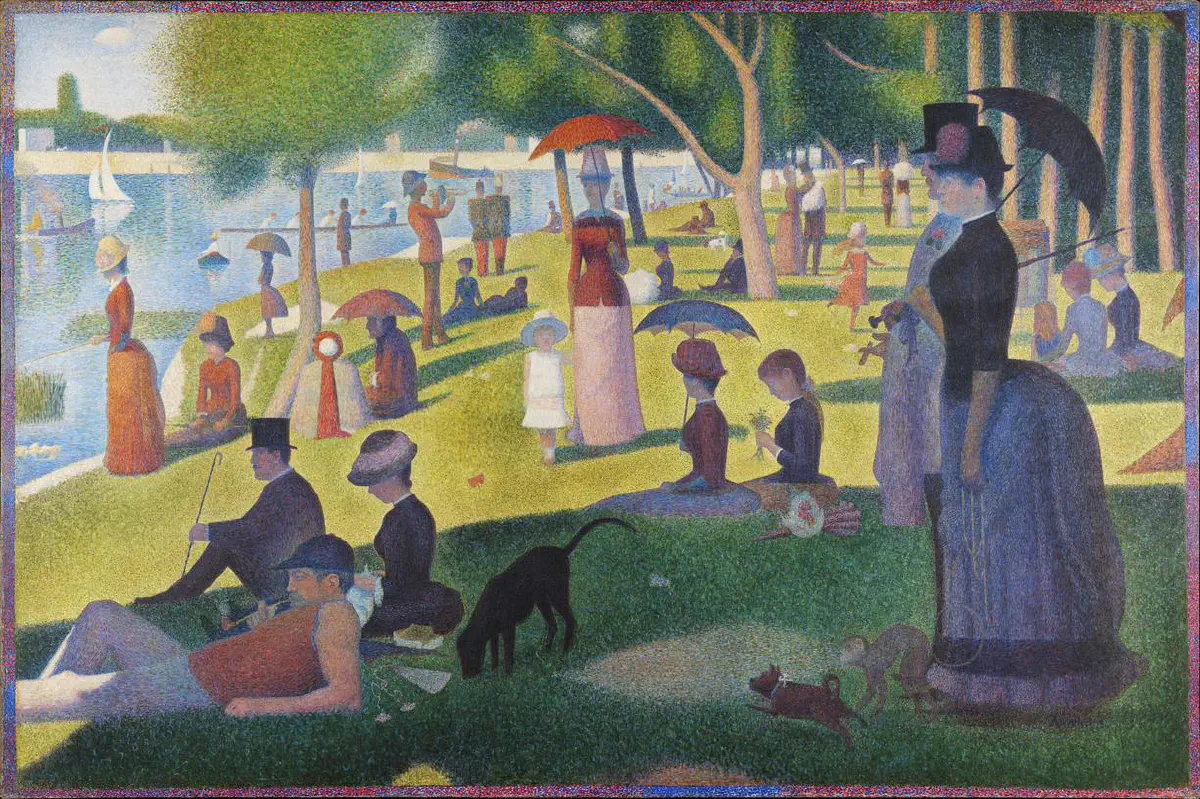
Seurat was born in Paris in 1859 and became a leading Post-Impressionist artist in late nineteenth-century France. He studied at the École des Beaux-Arts, where his training included drawing from antique sculpture and copying old masters, and he closely studied Eugène Delacroix’s use of color. Scientific writing about color and perception also shaped the ideas around his work. His major turning point came when the official Paris Salon rejected Bathers at Asnières; Seurat showed it instead with the independent artists in 1884. He later helped form the Société des Artistes Indépendants. His large painting A Sunday Afternoon on the Island of La Grande Jatte, begun in 1884 and completed in 1886, made his new approach impossible to ignore. The sources consulted here do not establish a major patron, so there is no need to invent one.
How He Saw the World: Color as a Set of Relationships
Seurat did not simply dab paint onto a canvas and hope for the best. He made drawings and oil sketches before beginning major canvases, and he spent a long time preparing La Grande Jatte: about two years, including extensive work outdoors in the park. In the finished painting, small touches of neighboring colors are meant to blend in the viewer’s eye rather than being mixed together on the canvas. That is the practical idea behind the style often called Pointillism.
The deeper point is that a color does not act alone. A blue beside an orange can seem different from the same blue beside a green. Seurat drew on contemporary ideas about color contrast and perception, and he thought a painter could organize color, tone, and line to create harmony and emotion. This was not a magic recipe, and the precise extent of some influences on his theory remains debated. But the ambition is clear: he wanted feeling to be built, not merely caught.
If You Could Stand Beside Him: The Slow Work Behind the Stillness
Imagine standing in Seurat’s studio. A large canvas waits, but it is not the first stop. There are studies to compare and sketches to revisit. He has been outside observing the park; now the people and the light are being arranged on the canvas with care. You might expect a quick sweep of the brush. Instead, the picture advances through many small touches, each one placed beside another.
A mark that seems perfect up close may look too strong from across the room; a color that appears quiet alone may change when its neighbor arrives. Seurat’s method depends on that distance. Step back and the separate touches begin to cooperate. Step close and you can see how much labor the apparent calm contains. He might point not to a single dot, but to the space between colors and ask you to look at what your eye is making there.
So try it: when you look at a Seurat, do you notice the separate marks first, or the light your eye assembles from them?
Works by Georges Seurat on the wall