Francisco de Goya
1799, Etching, aquatint, drypoint and burin, Metropolitan Museum of Art Public Domain · SourceThe Human Hook: A Court Painter with a Sharp Edge
Francisco de Goya made pictures for kings and nobles. He also made prints that poked at the follies and deceptions of society. Those two facts belong to the same artist: a successful court painter who was not content to make power look comfortable.
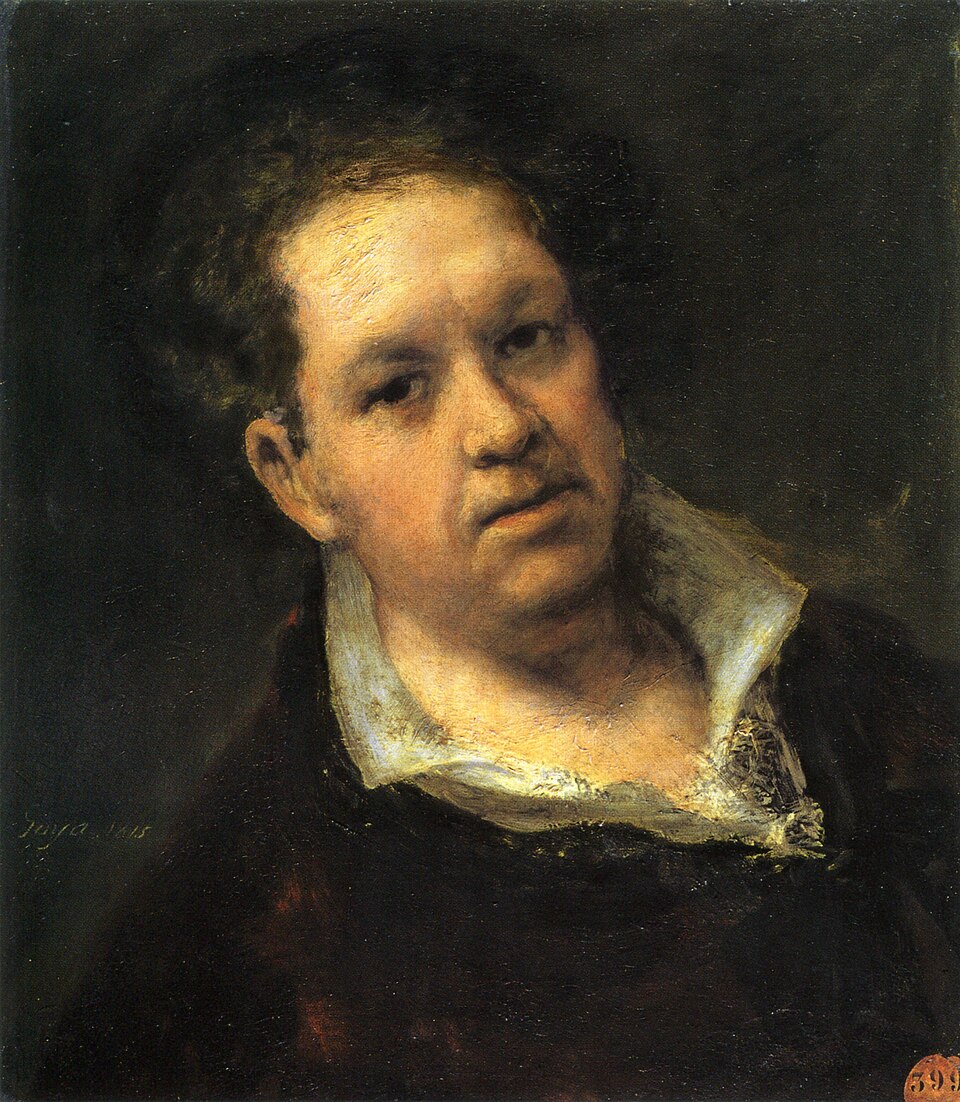
This self-portrait opens Los Caprichos, the series of prints Goya published in 1799. The caption identifies him as “Francisco Goya y Lucientes, Painter.” It is a plain professional introduction, but the work sits at the entrance to a series that looks well beyond polite portraits.
Quick Facts & Context: From Aragón to the Royal Court
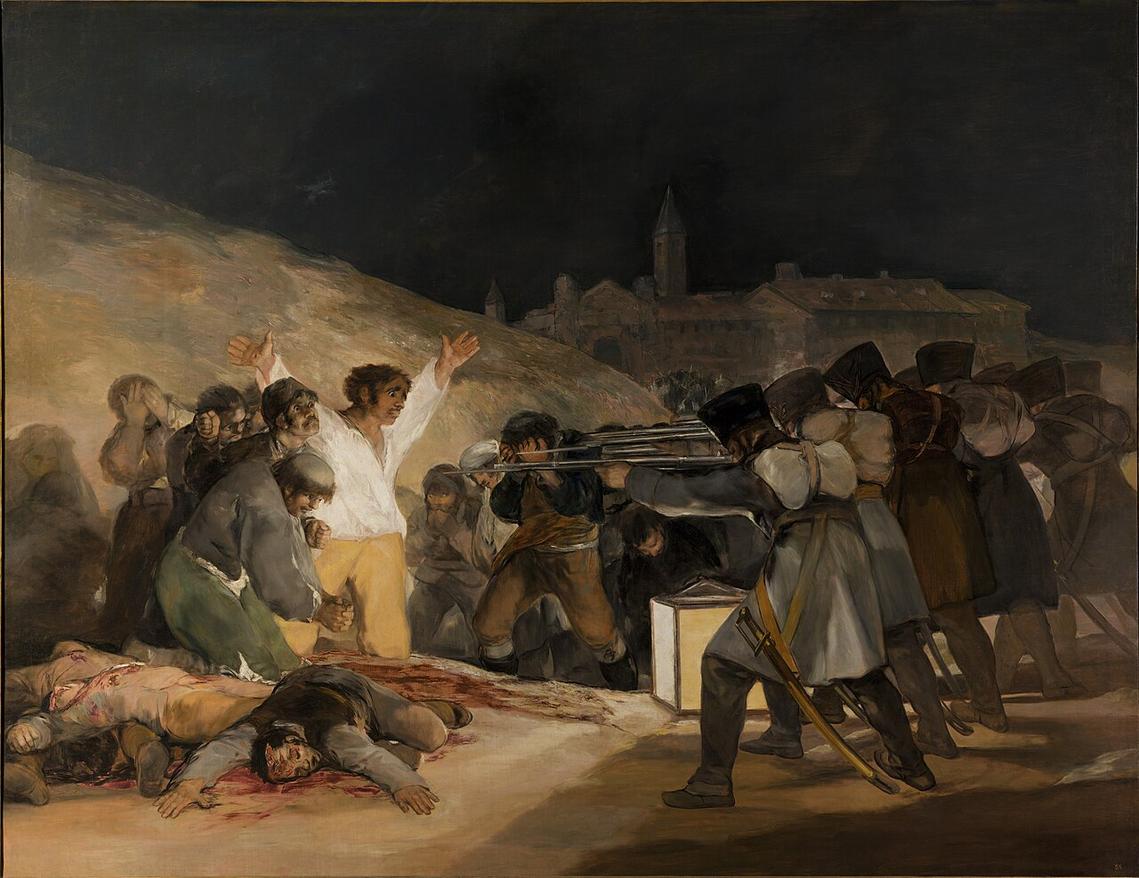
Goya was born in Fuendetodos, Aragón, in 1746. He studied painting with José Luzán, moved to Madrid, and later worked on designs for royal tapestries before becoming a painter to the Spanish Crown in 1786; in 1799 he reached the rank of First Court Painter. A severe illness in 1793 left him deaf, and the work that followed included the satirical Los Caprichos, published in 1799. He lived through the Peninsular War and made prints and paintings that confronted its violence, while his career continued to move between official commissions and more personal, unsettling work.
How He Saw the World: A Portrait Made of Marks
This is not an oil portrait built from smooth layers of paint. Goya made it as a print, combining etching, aquatint, drypoint and burin. Each process gave him a different kind of mark to work with. The result is not a polished court image designed to make its subject seem distant. It is a printed self-image, made by an artist who also used prints to examine the habits and errors of society.
Look at the contrast between the dark areas and the lighter face. Your eye goes straight to the person before it has time to settle on the title. Goya’s self-portrait does more than tell you who made the series: it puts the artist himself at its threshold. He is both the maker of the images and one of the people you are invited to look at closely.
If You Could Stand Beside Him: At the Printing Table
Imagine standing beside Goya as he works on this plate. There is no grand court room in this scene—just the image taking shape through several printmaking techniques, and a face emerging from the contrast of dark and light. We do not know what he said while making it. But the caption gives you the direct introduction he chose to leave: painter.
Look closely at that self-presentation. He does not hide behind a king, a patron, or a mythological character. He puts his own face at the start of a series that challenges what people accept as normal. What do you notice first: the artist presenting himself, or the critical eye you expect from the prints that follow?
Works by Francisco de Goya on the wall