Eugène Delacroix
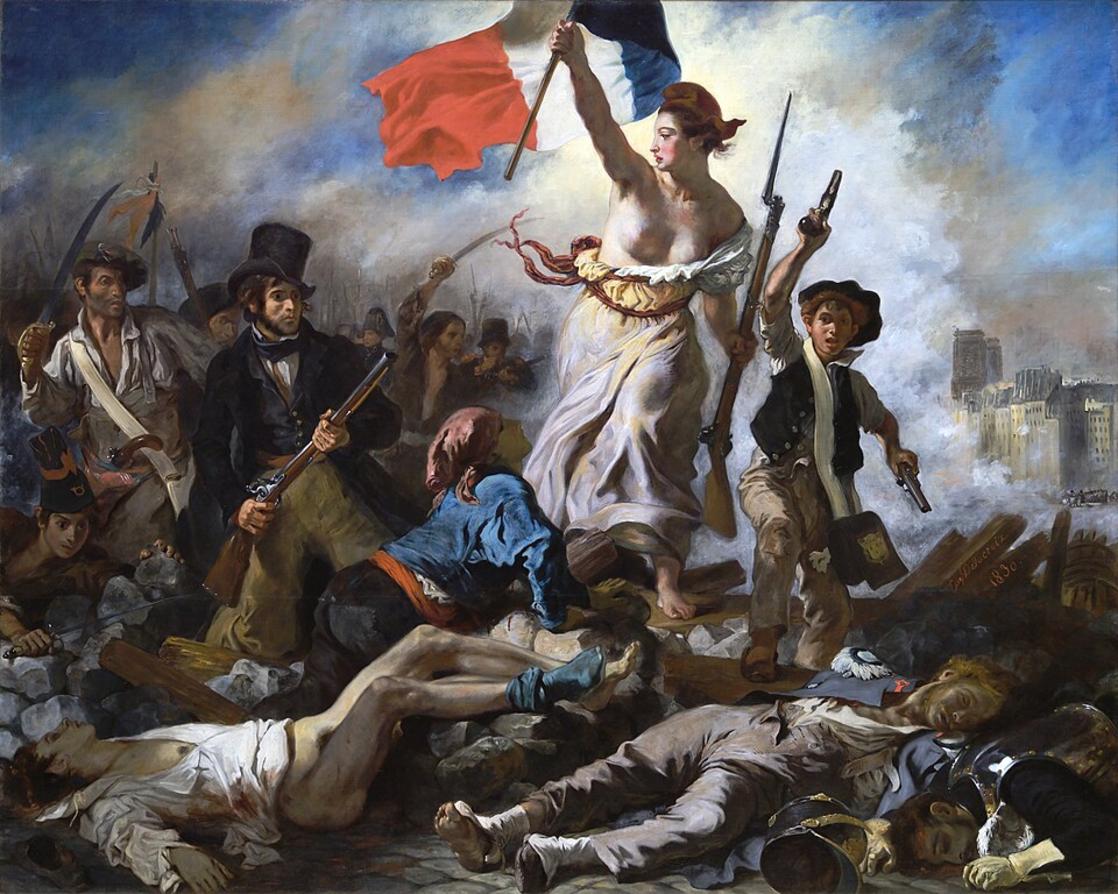
1837, Oil on canvas, Louvre Museum, Department of Paintings (RF 25) Public Domain · SourceThe Human Hook
A painting can be called “a massacre of art” and still be bought by the state. That was the kind of reception Eugène Delacroix knew: his Massacre at Chios showed suffering without turning it into a neat story of heroic victory. Critics objected. The state bought it anyway.
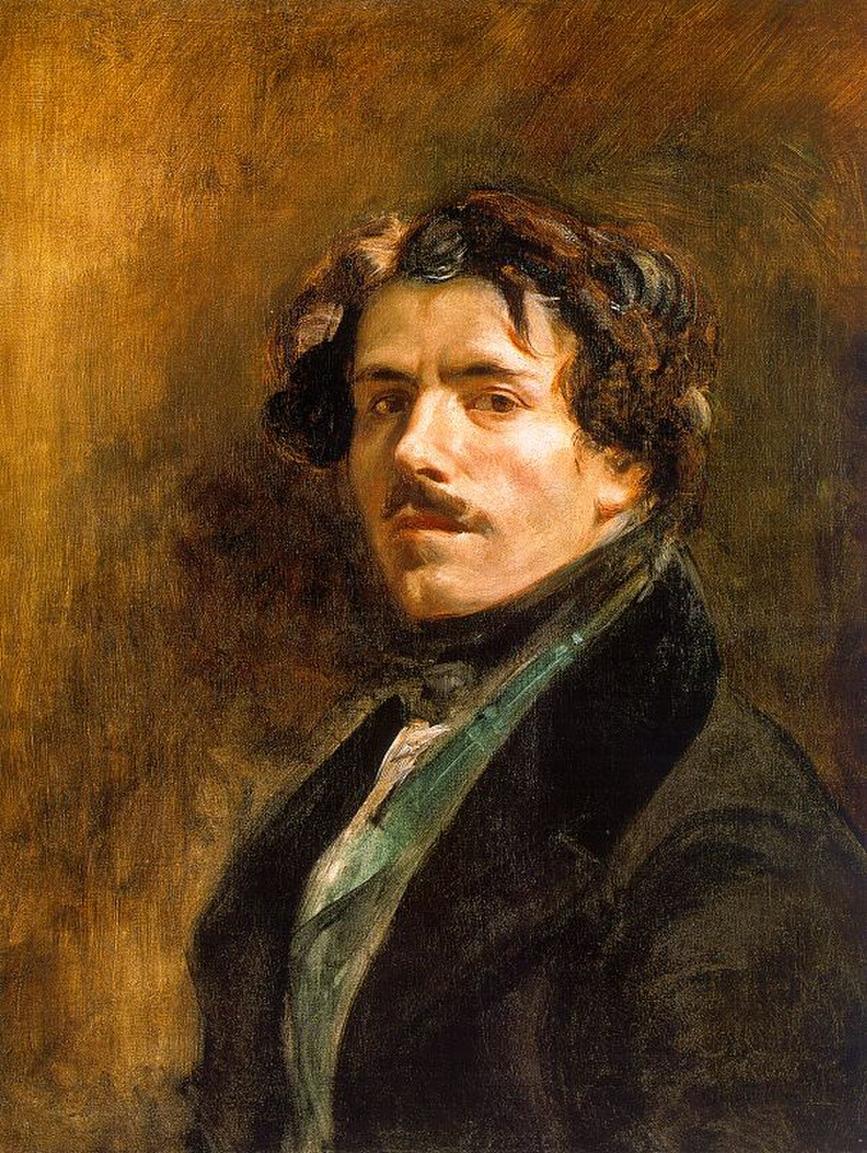
Look at Delacroix’s own face in this 1837 self-portrait and you meet the man behind that argument. The green vest is a quiet detail; the career was not. Delacroix made colour and movement carry the force that other painters placed in crisp outlines and carefully controlled poses.
Quick Facts & Context — A Romantic in a Changing Paris
Delacroix was born at Charenton-Saint-Maurice, near Paris, and became a leading French Romantic painter in the first half of the nineteenth century. He trained with the Neoclassical painter Pierre-Narcisse Guérin, but drew inspiration from Peter Paul Rubens and Venetian Renaissance painters. His friend Théodore Géricault helped point him toward Romanticism, while the poet Lord Byron supplied subjects and a taste for extreme drama. After the state bought his early The Barque of Dante, Delacroix received further commissions; a diplomatic trip to Morocco and Spain in 1832 later gave him new subjects that stayed with him for years.
How They Saw the World — Colour Before Clean Edges
Delacroix’s chief rival, Jean-Auguste-Dominique Ingres, stood for a different kind of authority: clear outlines and carefully modelled form. Delacroix pushed colour and movement forward instead. His brushwork could stay expressive rather than hiding the act of painting beneath a smooth finish. That was not carelessness. It was a way to make a scene feel as unsettled as the people inside it.
He also worked through drawing. Delacroix left thousands of drawings, studies and sketchbooks, and wrote that “Colour always occupies me, but drawing preoccupies me.” The line matters: this was no simple contest between a colour-lover and a draughtsman. He used drawing to organise the scene, then let colour and gesture make it move. Later, his expressive brushwork and study of colour influenced the Impressionists.
If You Could Stand Beside Them — A Studio Built Around a Gesture
Imagine standing just behind him—not as a witness to a documented studio moment, but as a visitor to the kind of working space his practice suggests. There are drawings nearby; a large scene is taking shape. He steps back, looks at the whole composition, then returns to one patch of colour. He is not polishing every edge into silence. He is trying to make the feeling legible.
The mistake you might catch is a tempting one: pushing the drama so far that a viewer notices the spectacle before the human cost. Delacroix knew that his work could provoke exactly that response. He might point you away from the loudest gesture and toward the way colour and movement pull your eye through the scene. In this self-portrait, start with the green vest, then look back at his face. What do you notice first: the painter’s composed gaze, or the restless colour and energy you now expect from his work?
Works by Eugène Delacroix on the wall