Caspar David Friedrich
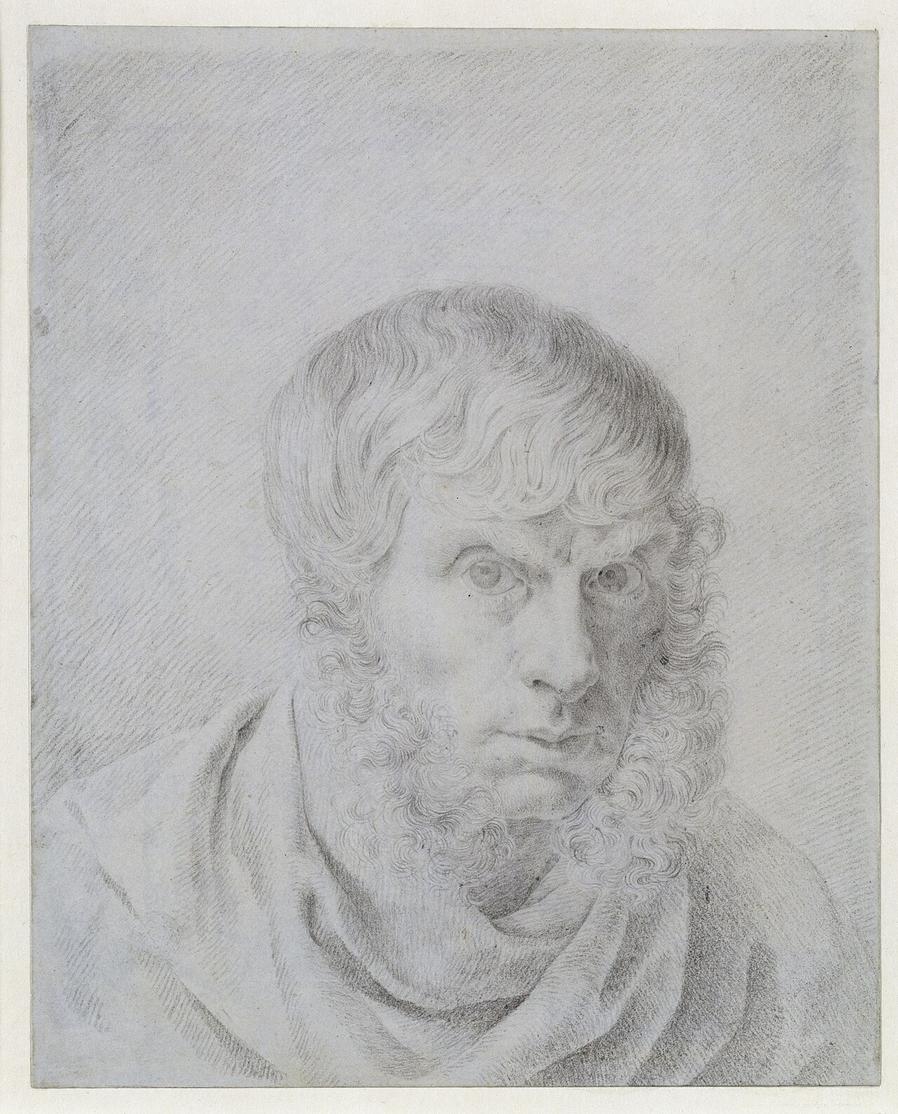
c. 1810, Black chalk on paper (mounted), Kupferstichkabinett, Staatliche Museen zu Berlin Public Domain · SourceThe face behind the mist
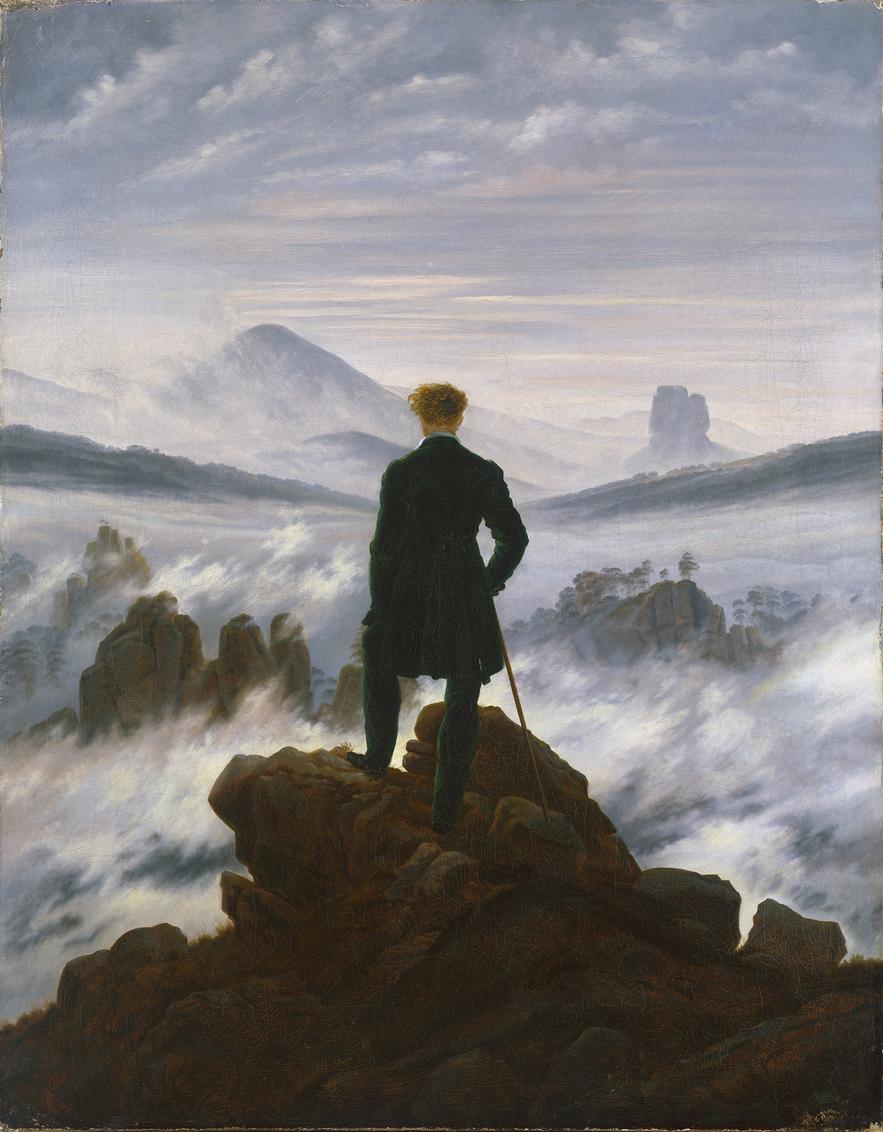
Caspar David Friedrich is famous for placing tiny people before enormous skies and landscapes. Here, there is nowhere to hide: the painter puts his own face in front of us. The surprise is how little the portrait tries to impress. No dramatic costume, no grand setting—just a closely observed head, turned slightly aside. The artist who made nature feel vast gives us a human-scale encounter.
A Romantic with a sharp eye
Friedrich was born in Greifswald, on the Baltic coast, and became one of the leading German painters of Romanticism. He studied in Copenhagen, settled in Dresden, and learned early to draw outdoors with his teacher Johann Gottfried Quistorp. The theologian Ludwig Gotthard Kosegarten helped shape his view of nature as a revelation of the divine. A prize at a Weimar art competition in 1805 brought recognition; later, purchases by the Prussian Crown Prince and support from Russian patrons helped his career. This portrait, made around 1810, is a chalk-and-pastel work on paper, not one of his celebrated oil landscapes.
Looking, then looking inward
Friedrich’s landscapes began with close observation. He made pencil studies from nature, then used memory to shape the light and atmosphere in finished works. That approach matters here too, though we should not pretend to know the exact steps he took to make this particular drawing. Chalk and pastel leave a different kind of evidence from oil: the image is built with marks on paper, not with the slow illusion of a deep, polished surface.
Look at the turn of the head. Friedrich does not give us a perfectly frontal, official likeness. His face angles away, while his gaze seems to meet the space just beside us. The result feels alert but private. This is no proof of what he was thinking; it is a choice of pose that makes you do a little work as a viewer. The portrait offers a person, not a key to his soul.
Beside the drawing board
Imagine a quiet studio. A sheet of paper rests nearby; Friedrich leans in to study the angle of his own cheek, then checks the drawing again. We cannot know the scene or his exact process, so treat this as an imagined moment, not a report from his studio. What we can say is that he trained himself to look carefully—and that this small portrait rewards the same patience.
Come closer to the eyes, then step back. The face is both a likeness and a construction: a handful of marks arranged to make someone seem present. Friedrich’s landscapes often ask you to stand with a solitary figure and look outward. Here, he turns that attention back toward the person doing the looking. When you meet his gaze, do you feel that he is looking at you—or that you have simply paused long enough to look at him?
Works by Caspar David Friedrich on the wall