
The Waterseller of Seville
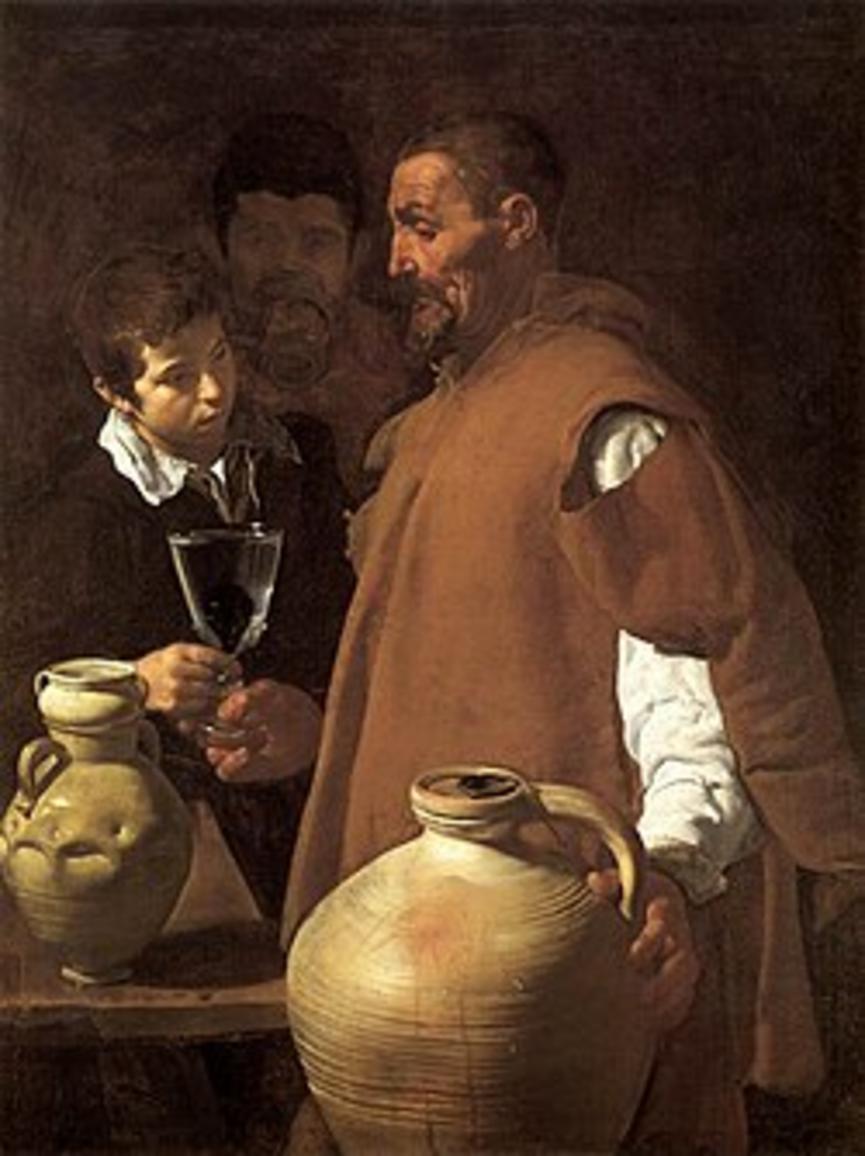
Diego Velázquez, 1618–1622, Oil on canvas, Wellington Collection, Apsley House, London Public Domain · SourceA Fig in a Glass of Water: Velázquez’s The Waterseller of Seville
A man sells water. A boy takes a glass. Someone else waits in the dark. That is almost the whole plot—and Velázquez makes you stay with it.
The painting belongs to the young Velázquez’s Seville years, and the title refers to three versions dated between 1618 and 1622. This is the best-known version, now in the Wellington Collection at Apsley House. Its subject is not a king, a saint, or a grand biblical event. It is a working seller doing his job. In seventeenth-century Seville, selling water was a trade associated with ordinary, lower-class life.
Look at the exchange before you look at the big jars. The seller offers the glass; the boy accepts it. Neither looks at the other, and neither looks out at you. A third man is just visible in the shadows behind them. The scene is quiet, but it is not empty: three people share a space without giving us a neat little story about what they feel.
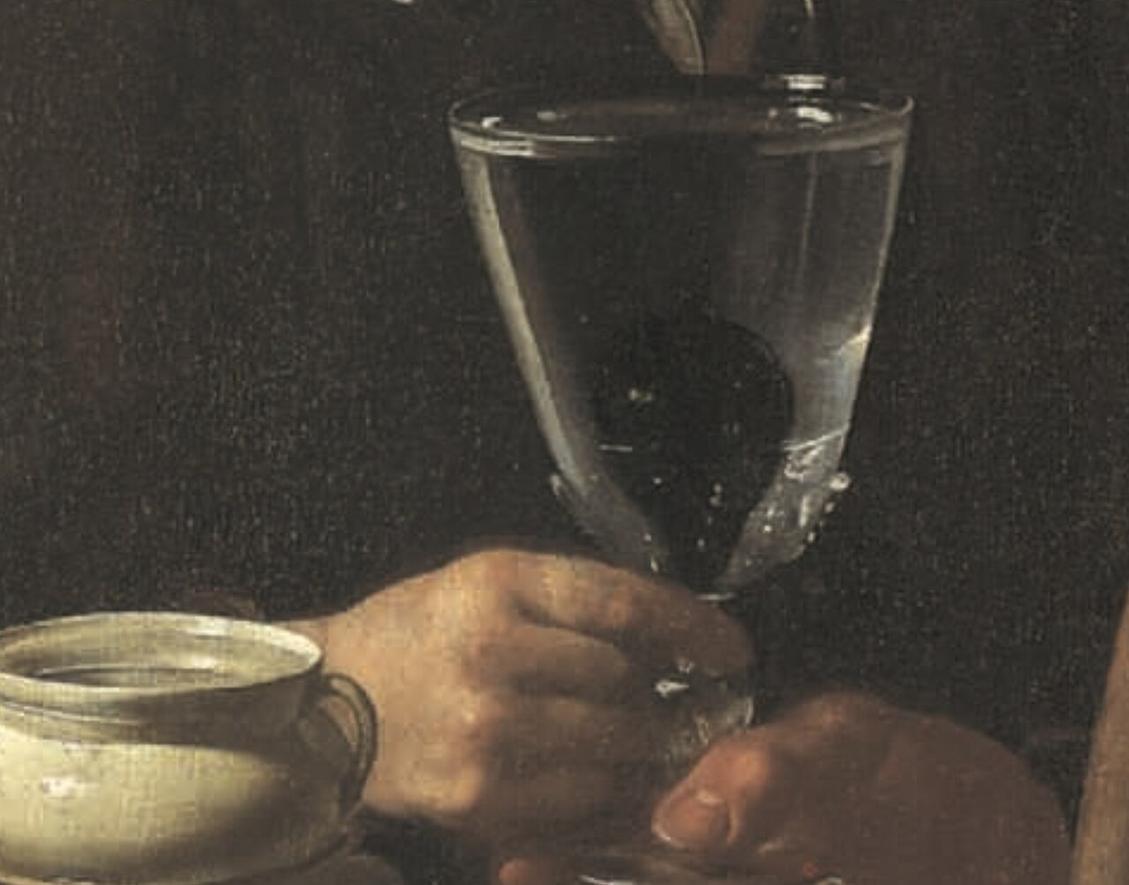
Now look at the glass. A fig sits in the water. The Wikipedia account says it was intended to make the water taste fresher; it is a small, practical detail, not a secret symbol you need a degree to decode. It also gives your eye a precise place to land in a painting dominated by dark clothing and enormous clay vessels.
The jars are not polite background props. Their rounded sides push toward your space, and the light picks out wet marks and droplets. Velázquez gives humble things the kind of careful attention that grand history paintings often reserve for important people. The seller’s worn face and plain clothes are not polished into an ideal. He is allowed to look like a person who has spent years outside in the sun.
Art historians have described the work as a bodegón, a Spanish genre that includes still-life subjects and everyday scenes. That label is useful, but do not let it make the painting sound like a shelf of objects. The water, glass, jars, and people belong together: this is a small human transaction, observed with extraordinary care.
There are three versions of The Waterseller of Seville, so details vary across them. In the Apsley House painting, keep your eye on the glass and then follow the light back to the seller’s hand. You may find that the quietest action in the room is the one you remember.