
The Third of May 1808
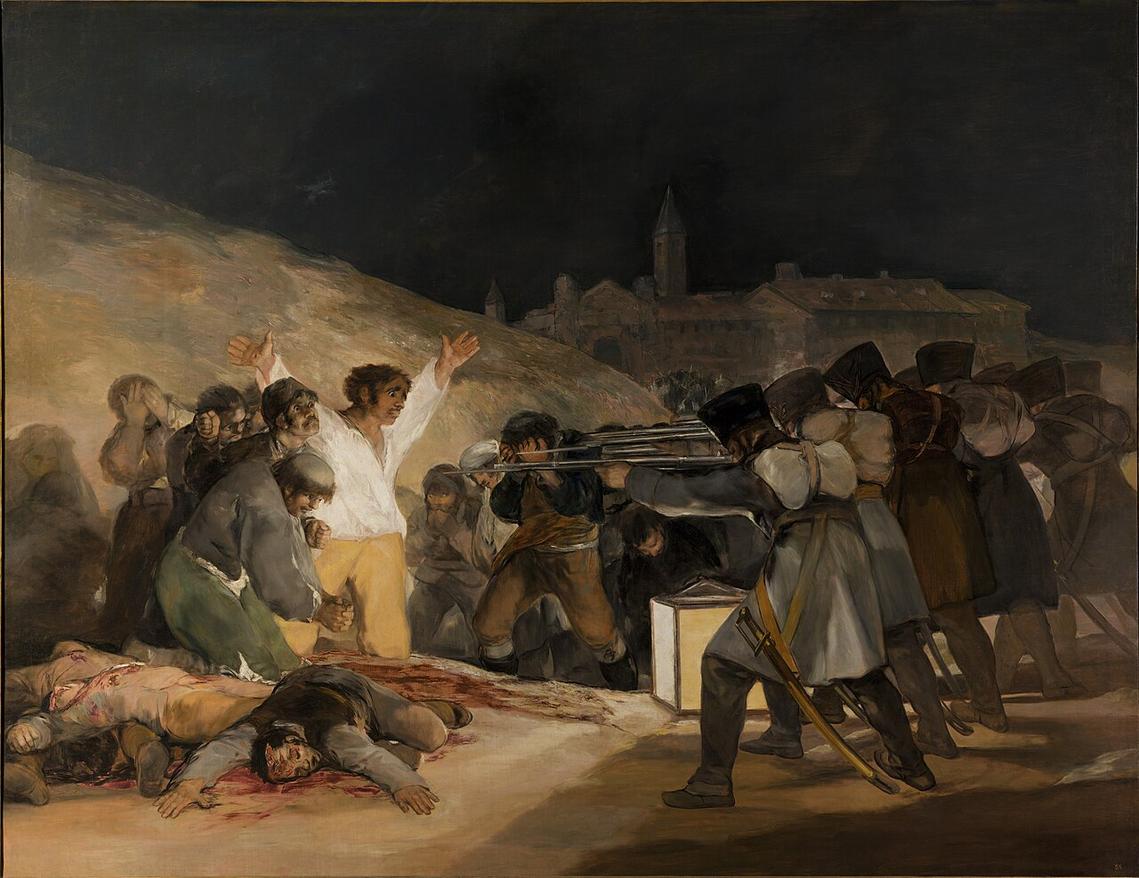
Francisco de Goya, 1814, Oil on canvas, Museo del Prado, Madrid Public Domain · SourceGoya’s Firing Squad: The Human Face of an Execution
You do not need to know the history before looking. Start with the man in the white shirt. His arms are raised, his face is turned toward the rifles, and a bright lantern makes him the easiest person in the painting to see. The soldiers, by contrast, face away from us. Their bodies line up; their faces disappear. One man is exposed. The men about to shoot him have become a unit.
That imbalance is the point. Goya gives the condemned man a face and gives the firing squad almost none. The soldiers’ repeated backs and raised guns form a hard diagonal across the scene. On the other side, the victims are uneven, frightened, and already falling. The composition does not let you mistake an execution for a clean military diagram. There are bodies on the ground. There is a person still standing, waiting.
Look again at the lantern. It is not a heavenly glow or a soft sunset. It is a practical light placed on the ground, illuminating the scene like a stage that nobody chose to enter. Its sharp brightness picks out the white shirt and the man’s open hands. The surrounding darkness gives the event no grand setting and no comforting distance. You are close enough to see the gesture, but powerless to stop what is coming.
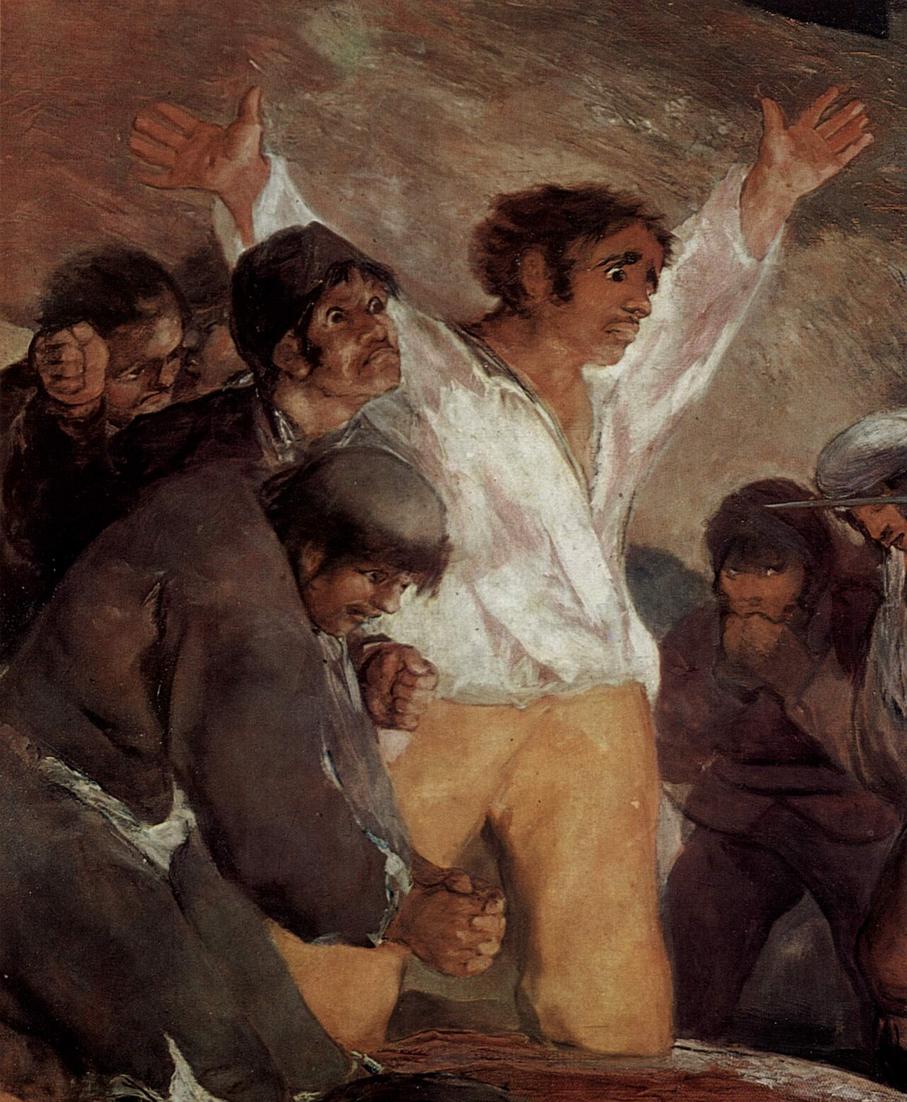
Goya painted The Third of May 1808 in 1814. The title points to a specific date, but the scene’s force does not depend on memorising a timeline. Notice how little individuality the painting grants the men with guns, and how much it asks you to see in the man facing them. That contrast is a choice made by a painter—not a neutral report from the sidelines.
A useful thing to carry with you: look at who gets a face. Here, the victim does. The armed men do not. Goya turns that difference into the painting’s argument, without giving you a speech or pretending that looking is the same as helping.
Nameplate
The Third of May 1808
Francisco de Goya, 1814
Medium: Oil on canvas
Collection: Museo del Prado, Madrid
Source: Wikimedia Commons file page · Public domain

Detail image: Wikimedia Commons, “The Third of May 1808 in Madrid (detail)”, public domain.
