
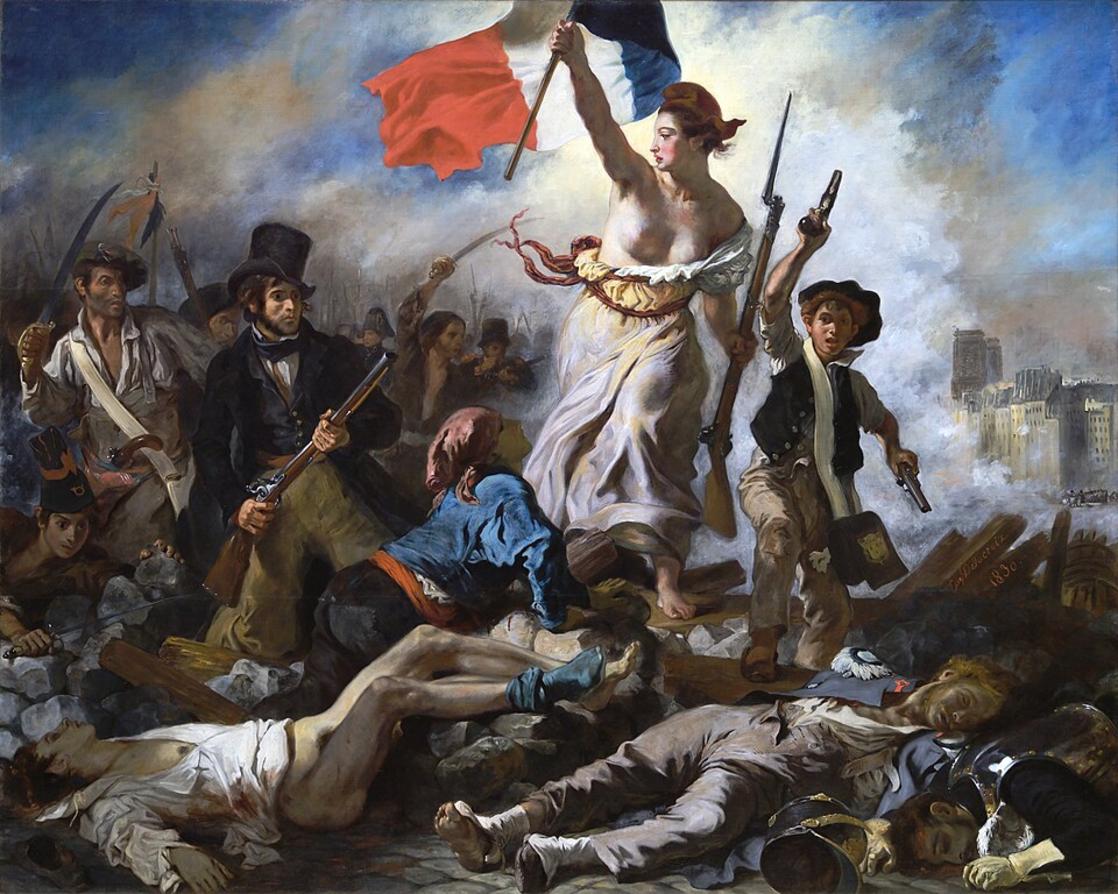
Liberty Leading the People
Eugène Delacroix, 1830, Oil on canvas, Musée du Louvre, Paris Public Domain · SourceA revolution with a date—and a woman at its center
You probably know the picture: a bare-breasted woman lifts the French flag and strides over a barricade, followed by armed people. But this is not a scene from the French Revolution of 1789. Eugène Delacroix painted it in 1830 to commemorate the July Revolution, which toppled King Charles X.
That difference matters. Delacroix was not painting a distant founding legend. In a letter to his brother on 21 October 1830, he called it “a modern subject—a barricade,” adding: “if I haven’t fought for my country at least I’ll paint for her.” He painted the work that autumn; it appeared at the Paris Salon in 1831.
Look at who is doing the leading
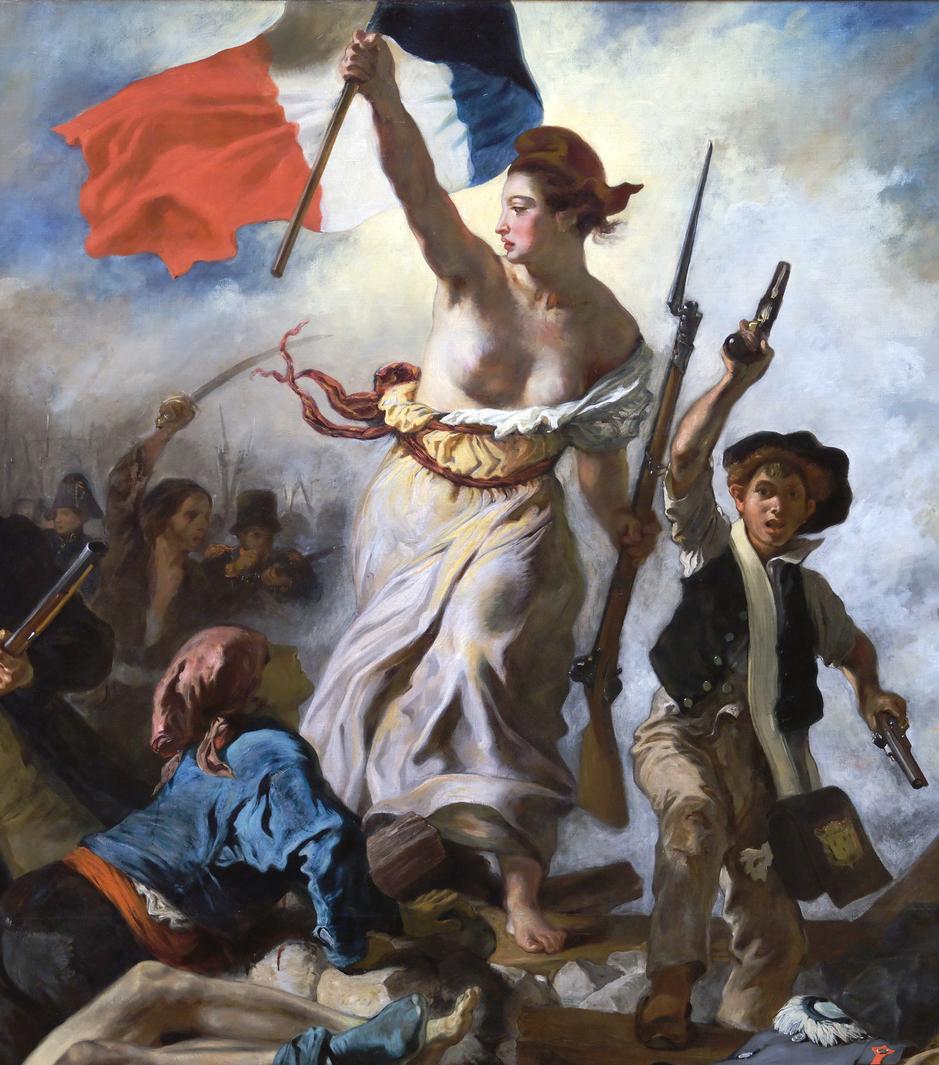
The central figure is both an allegorical Liberty and a woman of the people. Her Phrygian cap had already become a symbol of liberty during the first French Revolution. Delacroix gives this symbol a working body: she is barefoot, moving forward, and carrying a bayonetted musket as well as the tricolour.
The crowd is not one tidy social class. A man in a top hat stands among a worker and a boy with pistols. The painting asks you to read them together, not as a polished parade but as people caught up in the same upheaval. Look into the distance, too: a second, tiny tricolour can be seen flying from the towers of Notre-Dame.
The painting had a political afterlife
The French government bought the canvas in 1831, intending it as a reminder of the revolution that had brought Louis-Philippe to power. It was removed from public view after the June Rebellion of 1832, returned to Delacroix, and was not openly displayed again for years. The Third Republic acquired it for the Louvre in 1874.
The work returned to display in April 2024 after conservation. The restoration revealed details dulled beneath old varnish and dirt: bright clouds and smoke, a dress originally painted light grey with touches of gold, and a boot at the lower left that had blended into the paving. Even a familiar image can change when someone looks closely—and carefully.
So when you next see the painting, do not stop at “freedom triumphs.” Notice the dead beneath the marchers, the small flag at Notre-Dame, and the different people gathered behind Liberty. The picture is not a quiet promise that history will turn out well. It is an image of people pushing into an uncertain moment.